Buy the $9 brush if you have a light touch - budget models deliver most of the plaque-removal benefit already. Buy the $20 one if you brush hard or your gums bleed, because a pressure sensor is the feature that actually protects you.
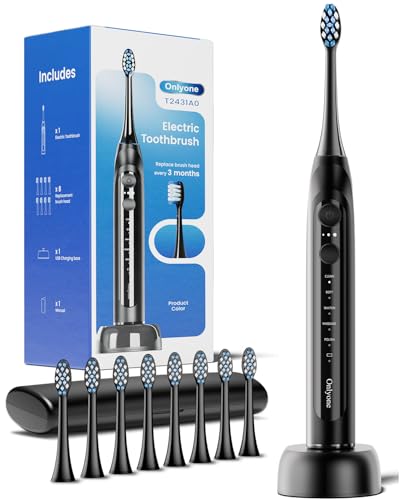
Onlyone Electric Toothbrush for Adults, Rechargeable Electric Toothbrush with 8 Brush Head
For anyone with a gentle brushing habit. Research shows budget power brushes deliver most of the measured benefit over manual brushing, so at $9 the value is hard to beat.
- Comes with multiple brushing settings, including clean, sensitive, whitening and massage modes, to adjust to...
- 2 minutes brushing timer are included
- Adopted advanced vibration technology, assisting with daily oral cleaning and plaque maintenance.
- This electric toothbrush is known for its long lifetime and will hold a charge for up to 30 days, perfect for...

EVERGLOW Electric Toothbrush for Adults and Kids - Rechargeable Power Toothbrush with 8 Br
For hard brushers and anyone with receding gums. The pressure sensor is not a luxury here - brushing too hard with a powered brush can accelerate gum recession, and the sensor is what stops that.
- 【2-Year Supply with 8 Heads】Maximize your value with our comprehensive oral care kit
- 【45-Day Usee & USB-C Fast Charge】Say goodbye to the inconvenience of daily charging
- 【6 Smart Modes for Cleaning】Choose from 6 customizable modes—Clean, Sensitive, Gum Care, White, Polish, and...
- 【Smart Guidance & IP67 Waterproof】Develop better habits with the built-in 2-minute smart timer and 30-second...
01The numbers, side by side
| Onlyone | EVERGLOW | |
|---|---|---|
| Price now | $8.98 | $19.97 |
| List price | $27.76 | $39.99 |
| Discount | 68% off | 50% off |
| Costs more | - | $10.99 |
| Price | $8.98 | $19.97 |
| Pressure sensor | No | Yes |
| 2-minute timer | Yes | Yes |
| Quadrant pacing | Yes | Yes |
| Cleaning modes | Fewer | Multiple |
| Best for | Gentle brushers | Hard brushers, sensitive gums |
| Suits kids | Yes | Yes |
| Value per dollar | Excellent | Good, if you need the sensor |
02Pros and cons
Onlyone- Under $10, so replacing it is never a difficult decision
- Delivers most of the plaque-reduction benefit that power brushing offers
- Two-minute timer, which is the feature that changes brushing habits most
- Cheap enough to keep a spare for travel
- No pressure sensor - if you brush hard, this is the wrong brush
- Replacement heads from smaller brands can be harder to find in two years
EVERGLOW- Pressure sensor warns you before you damage your gums
- Multiple cleaning modes for sensitive teeth and gum care
- Longer battery life between charges
- Still under $20, so the protection costs very little
- Twice the price for a feature a gentle brusher will never trigger
- Extra modes are largely marketing - most people use one setting forever
03Both brushes win the argument that actually matters
The comparison people should be making is not $9 against $20. It is powered against manual, and that one is settled.
A Cochrane systematic review covering 56 randomised controlled trials found power toothbrushes reduced plaque by 21 percent and gingivitis by 11 percent more than manual brushes over three months. That is a large, well-evidenced difference.
Crucially, budget models deliver most of that benefit. The oscillation or vibration is doing the work, and that mechanism is not reserved for expensive brushes. So a $9 powered brush is not a compromised version of dental care - it is most of the way there.
04The pressure sensor is the one feature worth paying for
If there is a single reason to spend more, this is it, and it is a safety feature rather than a performance one.
A cheap brush without a pressure sensor can accelerate gum recession if you are a hard brusher. That is the risk nobody mentions when they tell you to buy an electric toothbrush: the motor does the scrubbing, so pressing hard adds damage without adding cleaning.
The sensor solves it by buzzing or flashing when you press too hard. It is a small piece of hardware that changes behaviour, and it is why the more expensive brush here is the safer buy for a lot of people.
05Timers matter more than modes
Both of these have a two-minute timer with quadrant pacing, and that is genuinely the most useful feature on any electric toothbrush.
Most people brush for far less than two minutes and believe they brushed for longer. A timer removes the guesswork, and quadrant pacing stops the common habit of spending most of the time on the front teeth.
Cleaning modes are a different story. Sensitive, gum care, whitening - most people pick one setting in the first week and never change it again. Treat extra modes as a tiebreaker, not a reason to spend more.
06Replacement heads are the real long-term cost
The brush is a one-off purchase. Heads are forever, and they are where the money quietly goes.
Heads should be replaced roughly every three months, so you are buying four a year for as long as you own the brush. Over three years that can exceed the price of either brush here.
This is the one place the cheaper brush carries a risk. Big brands guarantee head availability for years; smaller brands sometimes do not. Before buying either, check that replacement heads are easy to find and reasonably priced, because an orphaned brush is worthless no matter what it cost.
07Oscillating versus sonic, briefly
You will see two designs. Oral-B-style brushes use a small round head that oscillates, which feels focused around each tooth. Sonicare-style brushes use a longer head with a smoother high-frequency vibration.
Both clean well and the research does not crown a clear winner. The difference people actually notice is feel: the round head is more deliberate and tooth-by-tooth, the sonic head is gentler and faster to get used to.
If you have used one and disliked it, try the other type rather than spending more within the same design. Preference here matters more than price.
08Battery life is a convenience feature, not a health one
The more expensive brush lasts longer between charges. That is real, but be honest about how much it changes your life.
If the brush lives on a bathroom shelf next to a socket, battery life is close to irrelevant - you charge it when it complains. It becomes genuinely useful when you travel often, because a brush that runs two weeks means no charger in the bag.
Do not let a battery specification decide this purchase. The pressure sensor is worth paying for; two extra days of runtime usually is not.
09What dentists actually emphasise
Most dentists put technique and consistency above any specific model. The brush that gets used twice a day for two minutes beats the better brush that gets used carelessly.
Oral-B and Philips Sonicare appear most often in clinical endorsements, largely because both have the biggest body of published research behind them. That is a reason to trust their claims, not a reason to assume cheaper brushes do nothing.
The practical reading of all this: buy a powered brush with a timer, use it properly, replace the head every three months, and add a pressure sensor if you brush hard. Everything past that is refinement.
10So which one, in one paragraph
If you brush gently and want the health benefit at the lowest possible cost, the $9 brush gives you nearly all of it. Spending more would buy features you will not use.
If you press hard, have sensitive or receding gums, or have ever been told by a dentist that you brush too aggressively, spend the extra eleven dollars. You are not buying a better clean - you are buying protection from a specific, permanent kind of damage.
Either way, budget for replacement heads before you decide. That is the cost that keeps coming, and it dwarfs the difference between these two brushes within the first couple of years.
11Which one fits you
Start with the $9 one. The jump from manual to powered is where nearly all the benefit lives, and you can decide about sensors once you know whether you like the feel of it.
Buy the one with the pressure sensor. Bleeding usually means either gum inflammation or too much force, and a powered brush without a sensor makes the second one worse rather than better.
The cheaper brush is fine, and the timer is the part that matters. Children rarely brush hard enough to need a sensor, and a $9 brush surviving a bathroom floor is less painful.
Pressure sensor, without question. Recession does not grow back, and the single most useful thing a powered brush can do for you is tell you when you are pressing too hard.
The budget one. It costs little enough to leave permanently in a wash bag, and losing it on a trip is an inconvenience rather than a loss.
Look at what annoyed you about the last one. If it was battery life or you kept pressing too hard, the $20 brush solves both. If it just wore out, the $9 one will do the same job.
Common questions
Are cheap electric toothbrushes any good?
Yes, and the evidence is stronger than most people expect. A Cochrane review of 56 randomised controlled trials found powered brushes cut plaque by 21 percent and gingivitis by 11 percent against manual brushing over three months, and budget models deliver most of that. The oscillation or vibration doing the work is the same mechanism used in expensive brushes - what you lose at the low end is sensors and modes, not the cleaning action itself.
Is a pressure sensor worth the extra money?
If you brush hard, it is the single most valuable upgrade on this page. Brushing too firmly with a powered brush can accelerate gum recession, and recession does not grow back - so this is a permanent problem being prevented rather than a nice-to-have. If you genuinely have a light touch the sensor will rarely trigger, and the cheaper brush gives you the same clean for less than half the price.
How often should I replace the brush head?
About every three months, or sooner if the bristles splay outwards. Worn bristles clean less effectively and can irritate the gum line. Over the life of the brush this is the dominant cost - four heads a year for several years will comfortably exceed what you paid for either brush here, which is why checking replacement head price and availability matters more than the sticker price of the handle.
Oscillating or sonic - which is better?
Neither wins clearly in the research. Oscillating heads are small and round and feel focused tooth by tooth; sonic heads are longer with a smoother vibration. Choose on feel rather than price, and if you disliked one type, try the other rather than spending more on the same design.
Do the extra cleaning modes matter?
Rarely. Most people settle on one mode in the first week and never change it. Sensitive mode is genuinely useful if your teeth react to cold, but the rest are largely marketing. Treat modes as a tiebreaker, not a reason to pay more.
Is an electric toothbrush better than manual?
For most people, measurably yes - roughly 21 percent less plaque and 11 percent less gingivitis over three months in pooled trial data covering 56 studies. That said, technique and consistency still matter more than the hardware. A powered brush used carelessly for thirty seconds will lose to a manual brush used properly for two minutes. What the powered brush gives you is a head start and, with the timer, a much better chance of actually brushing for long enough.
Can an electric toothbrush damage your gums?
It can if you press too hard, because the brush is already doing the scrubbing and your force just adds pressure. This is exactly the problem a pressure sensor solves. Let the brush rest against the tooth rather than pushing it.
Is a $9 electric toothbrush good enough for a child?
Usually yes, and the timer is the feature that matters most for children. They rarely brush hard enough to need a pressure sensor, and a cheap brush surviving bathroom accidents is far less painful than an expensive one.
Browse more in this category
Ready to pick one?
Prices shown are the ones we last saw on Amazon and can change at any time. Always confirm the current price on Amazon before buying. As an Amazon Associate we earn from qualifying purchases, at no extra cost to you.